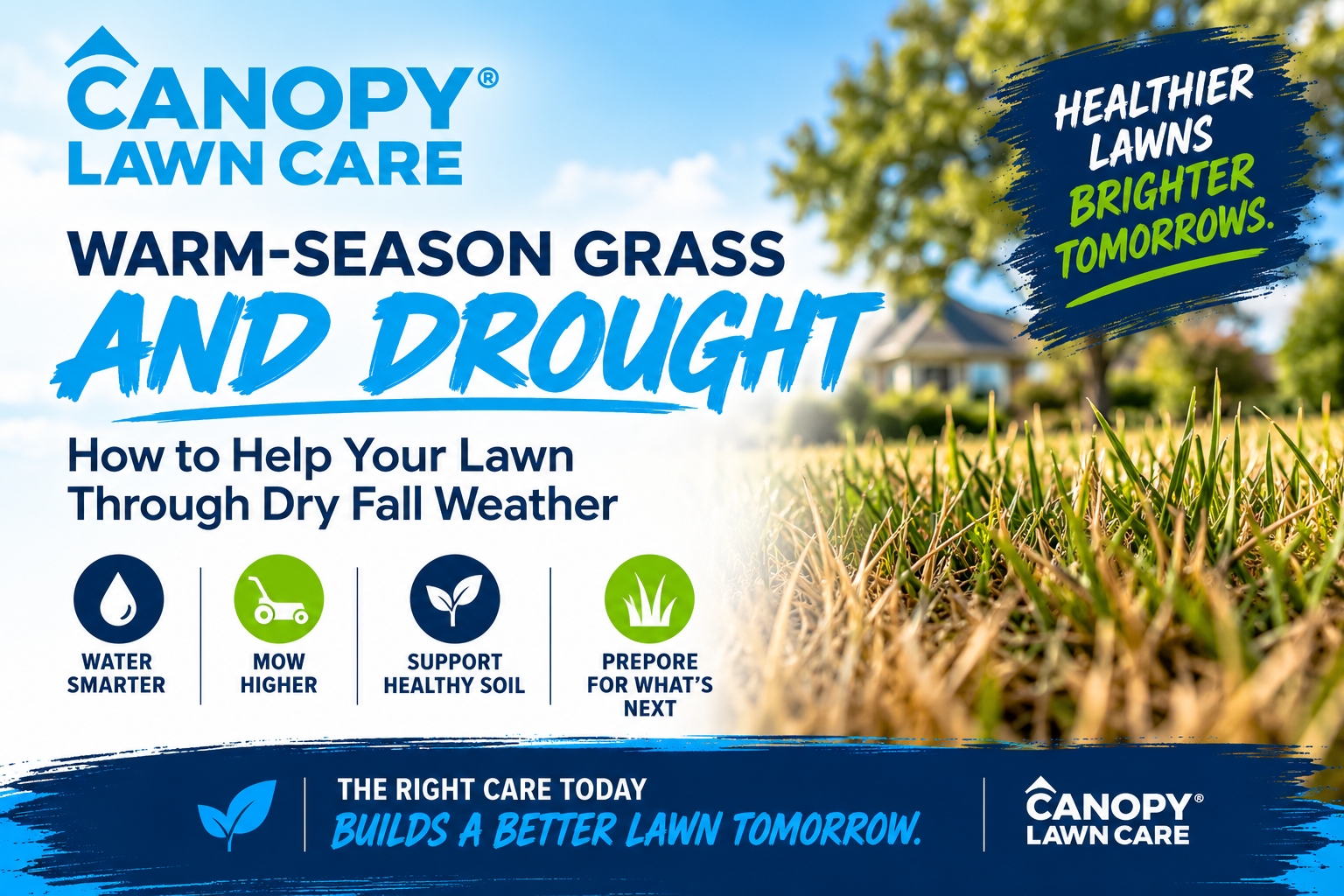
Warm-Season Grass and Drought: How to Help Your Lawn Through Dry Fall Weather

Fall usually brings cooler temperatures and relief from summer heat. But when dry weather continues into fall, warm-season lawns can face a difficult combination: drought stress at the same time their natural growth is beginning to slow.
Bermuda, zoysia, St. Augustine and centipede grasses are built for warm conditions, but prolonged lack of water can still take a toll.
The goal during a dry fall isn’t necessarily to keep your lawn perfectly green. It’s to recognize drought stress, avoid adding unnecessary stress and help your lawn make the healthiest possible transition into the next season.
Key Takeaways
- Warm-season grasses can experience drought stress even as their growth naturally begins slowing in fall.
- Brown or thinning turf doesn’t automatically mean your lawn is dead—or that drought is the only possible cause.
- Deep, appropriate watering is generally more useful than frequent, shallow watering when irrigation is needed and permitted.
- Mowing too short can add stress to an already drought-stressed lawn.
- Drought-stressed turf may recover more slowly as temperatures cool and warm-season growth declines.
- Supporting healthy soil can help create better conditions for roots, water movement and long-term lawn health.
What Does Drought Stress Look Like in Warm-Season Grass?
Drought stress doesn’t always begin with a completely brown lawn.
Early signs can include grass blades that wilt, fold or lose their normal color. Footprints or mower tracks may remain visible longer because stressed blades aren’t quickly springing upright.
As dry conditions continue, sections of the lawn may become tan or brown.
But here’s where fall gets complicated: warm-season grasses also naturally slow and eventually enter dormancy as temperatures decline.
Bermuda or zoysia changing color doesn’t automatically indicate drought damage. Insects, disease, irrigation problems and seasonal dormancy can sometimes produce similar symptoms.
Look at the whole picture—recent rainfall, temperatures, soil moisture, irrigation coverage and whether discoloration is uniform or appearing in unusual patches.
How Should You Water a Lawn During Fall Drought?
When supplemental irrigation is appropriate and allowed under local watering restrictions, the objective is generally to encourage moisture to reach the root zone rather than repeatedly wetting only the surface.
Frequent, shallow watering can encourage roots to remain closer to the surface. Deeper watering at appropriate intervals can encourage a more resilient root system.
Early morning is typically the preferred time to irrigate because less water is lost to evaporation than during the heat of the day.
Most importantly, don’t rely solely on a preset irrigation schedule. Check the soil, recent rainfall and the lawn itself.
Fall temperatures may be lower than summer, meaning the lawn’s water needs can change even when rainfall remains limited.
Should You Keep Mowing Drought-Stressed Grass?
Yes, if the grass is still growing—but avoid putting additional stress on it.
One of the biggest mistakes during drought is mowing too aggressively. Removing too much leaf tissue at once reduces the plant’s ability to support itself at a time when resources are already limited.
Continue mowing as needed while following the basic principle of removing no more than about one-third of the grass blade at a time.
As warm-season growth naturally slows, you’ll likely need to mow less frequently.
Follow the lawn rather than the calendar.
Should You Fertilize a Drought-Stressed Lawn?
A stressed lawn doesn’t automatically need more fertilizer.
Applying nutrients with the goal of forcing new growth during significant drought can work against what the grass is naturally trying to do—especially as a warm-season lawn approaches dormancy.
The better question is: What does the lawn and soil actually need right now?
Grass type, soil conditions, weather, available moisture and the time of year should all factor into lawn nutrition decisions.
That’s one reason Canopy emphasizes a soil-first approach rather than treating every struggling lawn with the same inputs.
Why Soil Health Matters During Drought
Healthy soil can’t make rain appear, but it can influence what happens when water does reach your lawn.
Soil structure, compaction and organic matter can affect how effectively water moves into and through the root zone. Stronger root systems also give turf access to a larger area from which to obtain available moisture.
That’s why drought preparation shouldn’t begin when the forecast turns dry.
Building healthier soil and stronger roots is a long-term strategy that can help lawns become better prepared for environmental stress.
What About Weeds During a Fall Drought?
A thin or stressed lawn can create opportunities for weeds, and fall is also when certain cool-season weeds begin germinating.
That means drought doesn’t eliminate the need to think ahead about weed pressure.
For many warm-season lawns, properly timed fall pre-emergent weed control can help prevent targeted winter weeds before they become established.
However, treatment decisions should account for current lawn conditions, local weather and the specific weeds being targeted.
We’ll explore fall weed prevention in greater detail in the next article in our fall lawn-care series.
Will Drought-Stressed Warm-Season Grass Recover?
It can, but recovery depends on the severity and duration of the drought, the grass species, soil conditions and the overall health of the lawn.
Timing matters too.
Bermuda and other warm-season grasses recover most aggressively during active warm-weather growth. If significant drought stress occurs late in the season, there may simply be less growing time available for visible recovery before dormancy.
That doesn’t necessarily mean the lawn won’t recover.
Some of the recovery you want to see may need to wait until warm-season growth resumes.
Protect the Lawn You Have Now
During drought, doing more isn’t always better.
Pay attention to what your grass is telling you. Water appropriately when needed and permitted. Avoid aggressive mowing. Don’t automatically push new growth. Keep soil health in the conversation. And recognize that warm-season turf is simultaneously responding to drought and preparing for its normal seasonal slowdown.
At Canopy Lawn Care, we believe healthier lawns start from the ground up—with smarter care based on your grass type, soil, climate and current conditions.
If dry fall weather has your lawn struggling, your local Canopy Lawn Care team can help identify what’s happening and determine the appropriate next steps for your lawn.